 Serving All Phoenix, Arizona Areas
 100% Satisfaction Guarantee

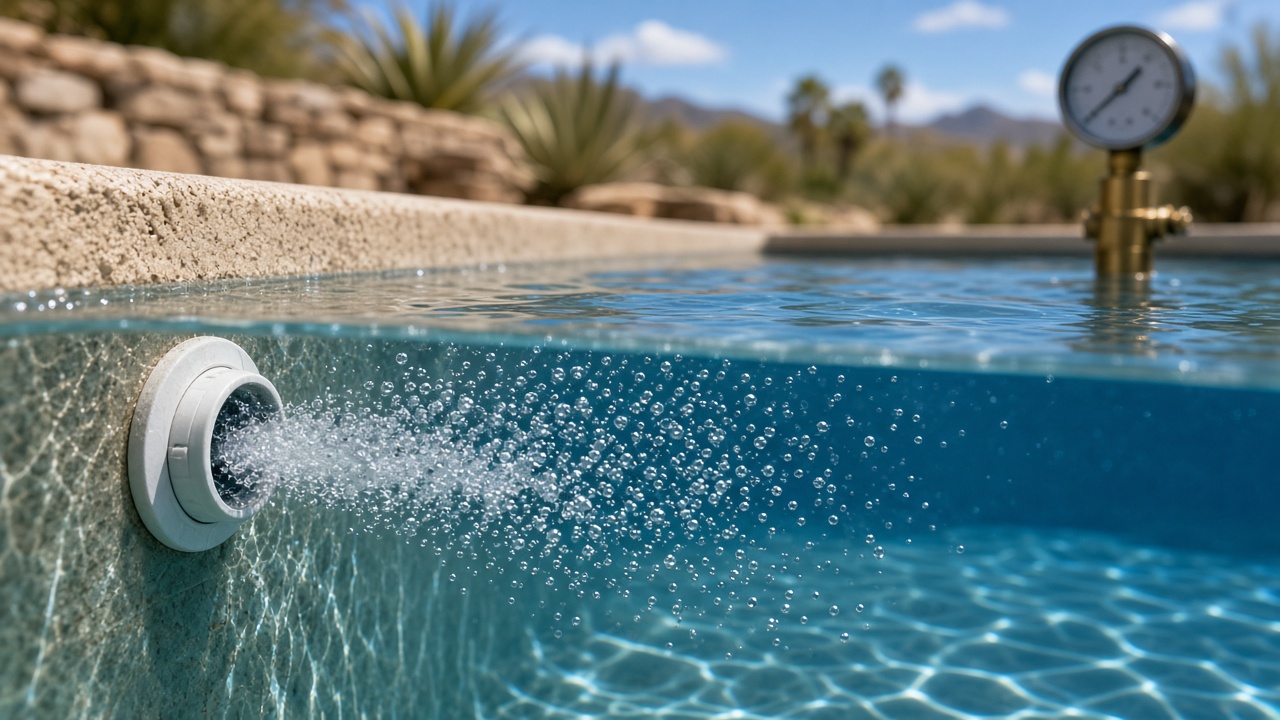
When homeowners call us for pool repair services in Scottsdale, AZ, the first clue is often small: a stream of bubbles from the return jets, a waterfall that looks weaker than it used to, or a filter gauge that keeps creeping up.
At Roadrunner Pool Service, we troubleshoot flow problems by working from the symptom back to the cause. This guide covers what bubbles, weak returns, and a rising gauge usually point to, what is safe to check yourself, and when it is time for a repair visit.
Already seeing one of these signs? Call 602-460-2221 and we will give you an upfront quote before any work begins.
Reading the Symptoms: Bubbles, Weak Returns, and Gauge Readings
Your circulation system has two halves. The suction side pulls water from the skimmer and main drain into the pump. The pressure side pushes it through the filter and back to the pool. Most flow problems start on one side or the other, and the symptoms help us tell which.
-
Steady bubbles in the returns or air in the pump basket: Usually a suction-side air leak.
-
Weak returns with a low filter gauge: Often a restriction before the filter, such as a full basket or air in the line.
-
Weak returns with a high filter gauge: Usually a pressure-side problem, most often a dirty or damaged filter.
-
Pump gurgling or losing prime: The pump is starving for water, which points back to the suction side.
A short burst of air right after the pump starts, or after you clean a basket, is normal. A constant stream is not.
Suction-Side Air Leaks
Any spot before the pump where air can sneak in will show up as bubbles and weak flow. Because this side of the plumbing is under suction, a leak here often pulls air in instead of dripping water out. That is why many suction leaks are hard to spot by looking for wet ground.
Pump lid O-rings and unions
The pump lid O-ring is the most common culprit we find. Over time it can dry out, flatten, crack, or pick up debris that breaks the seal. Unions and threaded fittings near the pump can loosen or wear the same way.
Hard Valley water can leave scale on fittings and seals, which may keep them from seating fully.
Low water level and skimmer issues
Water evaporates quickly in our climate. If the level drops toward the bottom of the skimmer opening, the skimmer starts gulping air and the pump can lose prime. A stuck skimmer weir, a cracked skimmer throat, or a basket that is clogged with leaves can create the same effect.
This is the easiest cause to rule out. Bring the water back to about the middle of the skimmer opening and see if the bubbles stop.
Pressure-Side Problems
When the gauge on top of the filter reads high and the returns feel weak, water is having trouble getting through the filter or the lines after it.
High filter pressure
Every filter has a normal clean reading. Write yours down right after a cleaning. When the gauge climbs several pounds above that baseline, it is usually time to clean or backwash.
Scottsdale pools near the desert edge tend to see heavier dust and debris loads, and fine dust packs into filter media fast. On those pools we often see pressure rise sooner after a windy stretch. Our pool service in Scottsdale keeps an eye on that gauge every week.
Clogged or damaged filter internals
If the pressure stays high right after cleaning, the problem may be inside the filter. Cartridges can be clogged with oils and scale that rinsing will not remove. D.E. grids can tear. Sand filters can have broken laterals or sand that has gone hard.
A partly closed valve on the return side, or a stuck diverter valve, can also raise pressure.
What You Can Safely Check First
Safety first: turn off the pump at the timer or breaker before you open the pump lid or filter, and release filter pressure with the air relief valve before opening anything. Never run the pump dry while you troubleshoot.
-
Check the water level and top it off if it sits low in the skimmer opening.
-
Empty the skimmer and pump baskets, and make sure the skimmer weir moves freely.
-
Look at the pump lid O-ring. If it is dry, cracked, or flat, clean it and seat it properly, or replace it.
-
Hand-tighten the pump lid and the unions near the pump. Do not force them.
-
Note the filter gauge reading before and after you clean the filter.
If the bubbles or high pressure come right back, it is time for a closer look.
When It Becomes a Repair Visit
Call us if the pump will not hold prime, the filter stays high after cleaning, you see water leaking from plumbing or valves, or the water level keeps dropping faster than normal evaporation. These can point to cracked suction fittings, failing valve seals, damaged filter internals, or a plumbing leak.
On a repair visit, our certified, background-checked technicians trace the problem through the system, explain what we found in plain language, and give you a clear quote first. Our pool repair services cover plumbing leaks, pumps, filters, valves, timers, and heater diagnostics, so one visit can usually sort out the whole flow path.
Scottsdale Pool Repair Questions
Why are there bubbles coming out of my return jets?
A steady stream of bubbles usually means air is getting in on the suction side, before the pump. The most common causes are low water at the skimmer, a dry or worn pump lid O-ring, or a loose union or fitting. A short burst right after the pump starts or after cleaning a basket is normal.
What should my filter pressure gauge read?
There is no single right number for every pool. The useful reading is your own clean baseline, taken right after the filter is cleaned. When the gauge climbs well above that baseline, the filter is usually due for cleaning; if it stays high after cleaning, something else needs a look.
Is it safe to run the pump if it keeps losing prime?
We do not recommend letting it keep running that way. A pump that runs without water moving through it can heat up and damage seals and other parts. Turn it off, check the water level and baskets, and call us if it will not hold prime.
Can low water level damage my pump?
It can. When the water drops below the skimmer opening, the pump starts pulling air, and repeated dry running is hard on the pump. Keeping the water near the middle of the skimmer opening is one of the easiest ways to protect it.
Schedule a Scottsdale Repair Visit
We have been tracing flow problems in Valley pools for 24+ years, we are licensed and insured, and our work is backed by our 100% Satisfaction Guarantee. Call 602-460-2221 or contact our team for a free estimate on your Scottsdale repair.