 Serving All Phoenix, Arizona Areas
 100% Satisfaction Guarantee

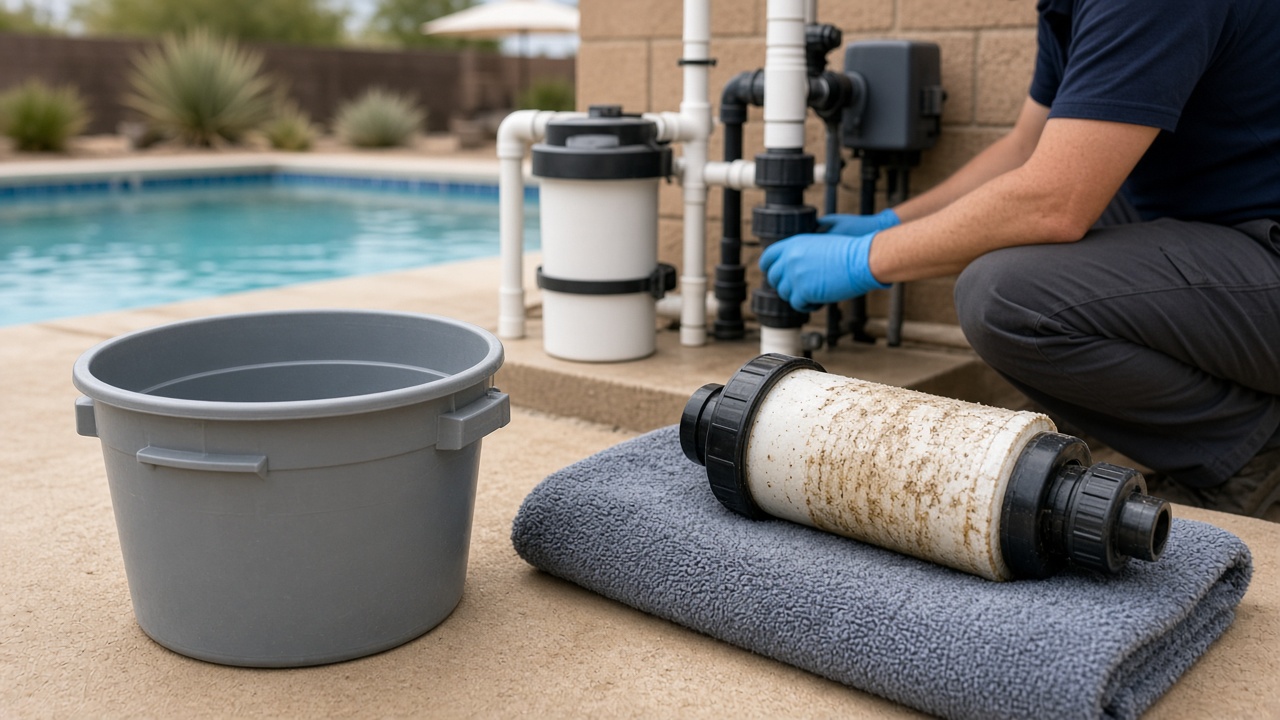
A salt system that stops making chlorine does not always mean a new cell. Good salt cell repair in Peoria, AZ starts by finding out whether the cell is dirty, worn out, or simply getting blamed for a problem somewhere else in the system.
At Roadrunner Pool Service, we test before we replace. This guide explains when an acid clean is enough, which parts around the cell tend to fail, and when a new cell really is the smart choice. For a diagnosis, call 602-460-2221.
Not Every Weak Salt Cell Needs Replacing
Low chlorine, a warning light, or a control panel that shows little or no output can come from several places. The cell itself is one possibility. Others include scale on the plates, a failed flow switch, low salt, or a problem with the control board.
That is why we start with a diagnostic. We test the cell, the board, the flow sensor, and the salt level, and we check for scale. If you move ahead with the repair, the diagnostic fee is credited toward it. You get a clear answer before you spend money on parts you may not need.
When an Acid Clean Is Enough
Peoria has hard water, and calcium scale builds up on salt cell plates over time. Once the plates are coated, the cell cannot make chlorine efficiently, even if it is otherwise healthy.
An acid clean dissolves that scale. We use muriatic acid at the correct ratio, handle it safely, rinse the cell, and then test it again to confirm it is working. When scale is the main issue, a proper cleaning often adds years of life to a cell.
Signs a cleaning may be all you need include:
-
Visible white or crusty buildup on the plates.
-
Output that has dropped slowly over months rather than all at once.
-
A cell that is still fairly young and has not been cleaned in a while.
Parts That Fail Around the Cell
Sometimes the cell is fine and a smaller part is the real problem. These repairs usually cost far less than a new cell.
Flow switch, temperature sensor, cable
The flow switch tells the system water is moving. If it fails, the system may show an Inspect Cell or No Flow message and stop producing chlorine, even with a good cell. Temperature sensors and cell cables can also wear out or get damaged in the heat.
We replace flow switches, temperature sensors, and cables. Our trucks carry common parts, so most of these repairs are finished in a single visit.
Power center and control board
The power center and control board run the whole system. Strong UV and summer heat are hard on electronics mounted outdoors. When the cell tests good but the system still will not produce chlorine, the board is a common suspect, and repairing it may be the right fix instead of buying a new cell.
You can read more about the full range of fixes on our salt cell repair page, including systems from Pentair, Hayward, and Jandy.
When Replacement Makes Sense
Cleaning and part swaps cannot fix a cell that has reached the end of its life. When testing shows the cell itself is worn, replacement is the honest answer.
Age and plate wear
The plates inside a salt cell are coated, and that coating slowly wears away with use. A cell with worn plates will not recover with cleaning. If the cell is several years old, has been cleaned many times, and still tests low, it is usually time for a new one.
OEM vs. aftermarket
You have two main options. An OEM cell from your system's manufacturer keeps you in line with the manufacturer's warranty. A quality aftermarket cell can save money and work well in many systems.
We carry both and will walk you through the trade-offs for your setup. Parts carry the manufacturer's warranty, which varies by component.
Salt System Life Expectancy in the West Valley
Manufacturers often rate salt cells for five to seven years. In the Valley, cells rarely last more than three to five. Hard water, long summer run times, and strong sun all shorten that life.
Many pools in Vistancia, Trilogy, and Westwing Mountain are newer, and so are their salt systems. That makes this a good time to set habits that help a cell last, like regular checks for scale and keeping salt levels in range. Older Peoria pools may already be near the end of a cell's life, so a test is a smart first step before you decide.
Wind and dust off the Lake Pleasant area also mean more debris in the water, which can affect flow. Learn more about our pool service in Peoria, where we keep an eye on your salt system during regular visits.
Peoria Salt Cell FAQs
How often should a salt cell be acid cleaned?
It depends on your water and how much the system runs. In hard-water areas like Peoria, it is wise to inspect the cell regularly and clean it when you see scale. Cleaning more often than needed can wear the plates, so inspect first.
Can I clean the salt cell myself?
Some owners do, but muriatic acid is dangerous to handle and easy to mix wrong. Too strong a solution or too long a soak can damage the plates. We use the correct ratio, handle it safely, and retest the cell afterward.
Is an aftermarket cell as good as the original?
A quality aftermarket cell can work well and save money. An OEM cell keeps you aligned with the manufacturer's warranty. We will explain both options for your specific system so you can choose.
Why does my new cell still show low output?
If a new cell reads low, the cause is often elsewhere: low salt, a bad flow switch or sensor, a damaged cable, or a control board issue. Cooler water can also lower output on some systems. A full diagnostic usually finds the reason.
Get a Straight Answer on Your Peoria Salt Cell
Before you buy a new cell, find out what is really wrong. We have worked on Valley pools for more than 24 years, our technicians are certified and background-checked, and we stand behind our work with a 100% Satisfaction Guarantee. We also handle the rest of the equipment pad through our pool equipment repair service.
Call 602-460-2221 or our West Valley line at 623-455-3161, or request a salt cell diagnostic online.