 Serving All Phoenix, Arizona Areas
 100% Satisfaction Guarantee

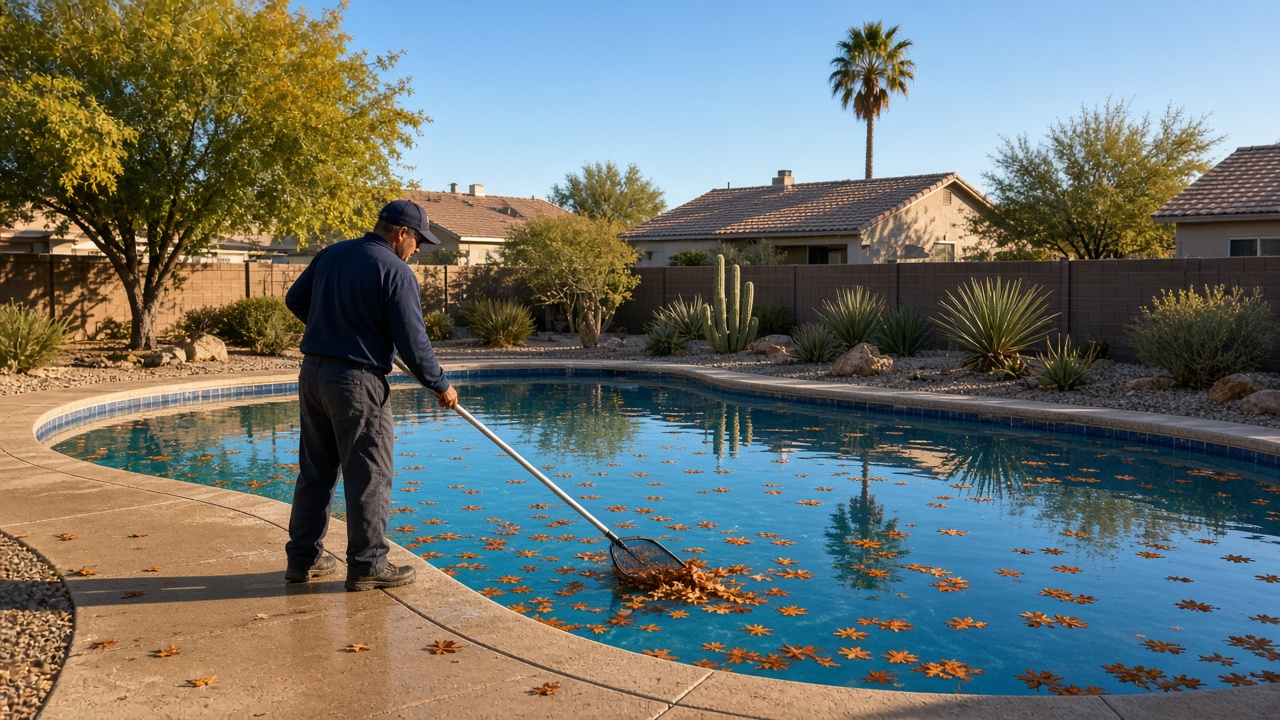
Weekly pool service in Glendale, AZ does not stop when swim season ends. It changes. From November through February, the pump runs differently, the water uses chlorine at a different pace, and the yard sends new kinds of debris into the pool.
At Roadrunner Pool Service, we get the same question every fall: can I pause service until spring? This article walks through what actually shifts on a winter route and why keeping the schedule usually saves money. Questions about your own pool? Call 602-460-2221.
Winter Pool Care Isn't Summer Pool Care
In July, weekly pool service in Glendale, AZ is mostly a fight against heat, intense UV, and heavy swimmer use. In December, the water is cooler, the sun sits lower, and most families are not swimming at all.
That does not mean the pool goes to sleep. It means the work moves around. Less time goes to chasing chlorine loss, and more goes to equipment settings, steady testing, and debris.
Glendale has a real mix of pools. Some were built in the 1980s in established neighborhoods, and some went in last year in newer developments near the Arrowhead and Westgate areas. Older equipment and newer variable-speed setups need different winter adjustments, which is one reason our pool service in Glendale is not one-size-fits-all.
Shorter Pump Run Times and Timer Adjustments
Cooler water usually needs less filtration time to stay clear. Many pools can have their daily run time reduced in winter, though the right number depends on your pool size, plumbing, and pump.
The details matter here:
-
Single-speed pumps on a mechanical timer often just get fewer hours on the dial.
-
Variable-speed pumps may run longer at a lower speed rather than shorter at full speed.
-
Automation systems need their schedules checked, since a summer program can keep running all winter if nobody changes it.
Cutting run time too far is a common mistake. Water that barely circulates can go cloudy, and debris settles in corners instead of reaching the filter. We aim for a schedule that keeps the water moving without wasting power.
Lower Chlorine Demand, Same Testing
Chlorine lasts longer in cool water with less sun. That often means smaller doses in winter. It does not mean skipping the test.
Glendale tap water is calcium-heavy year-round, and evaporation still happens on dry, sunny winter days. When the water level drops and fresh water tops it off, minerals keep adding up. pH and alkalinity can also drift even when nobody is swimming.
So we test the same way every week and adjust the amount we add, not the attention we pay. Owners who handle their own brushing but still want the water managed can look at our pool chemical service.
Leaf Drop and Cooler-Weather Debris
Winter debris in Glendale often comes from the yard itself. In many older neighborhoods, mature shade trees such as mulberry and ash tend to drop their leaves in late fall and early winter.
Leaves that sink and sit can stain plaster and feed algae once the water warms. A few weeks of leaf drop can also pack a skimmer basket and slow the pump.
On a winter visit, more of our time goes to:
-
Netting leaves off the floor before they break down
-
Emptying skimmer and pump baskets that fill faster in leaf season
-
Brushing steps and corners where leaf litter likes to collect
Every visit still ends with a detailed service slip showing what we did, your chemical readings, and anything we noticed on the equipment.
Why Pausing Service Costs More in Spring
A paused pool rarely looks bad in December. The trouble shows up in March, when the water warms and everything that built up over the winter comes due at once.
In our experience, a pool left alone for a few months tends to come back with some combination of these:
-
Leaf stains on the plaster that brushing alone will not lift
-
Chemistry far out of range, which takes several visits to correct
-
An algae bloom on the first warm week
-
Equipment problems nobody caught, like a leak at the pad or a timer that quit
Weekly visits keep those problems small. Our weekly routine stays the same all year: skimming, brushing, vacuuming as needed, testing and treatment, basket emptying, and an equipment check. We also show up on the same day every week, so you always know when we will be there.
Winter Weekly Service FAQs
Can I switch to every-other-week service in winter?
We generally recommend staying weekly. Two weeks of leaf drop and chemical drift is a lot to catch up on in one visit, and small problems have twice as long to grow. If you are weighing options, ask us and we will give you an honest read on your pool.
How many hours should my pump run in December?
There is no single number for every pool. Run time is often reduced in winter, but the right setting depends on pool volume, pump type, and how much debris your yard sends in. We set a schedule that keeps the water circulating and clear.
Does my pool still need chlorine when nobody's swimming?
Yes. Leaves, dust, and bacteria still enter the water whether anyone swims or not. Demand is usually lower in winter, so the doses get smaller, but the pool still needs a steady sanitizer level.
Will skipping winter service cause algae in spring?
It often does. Organic debris and low sanitizer sit quietly in cold water, then feed algae as soon as temperatures climb. Steady winter care is usually the easiest way to have a clear pool on the first warm weekend.
Keep Your Glendale Pool on Schedule
We have been caring for pools in the Valley for more than 24 years. Our technicians are certified and background-checked, and we are licensed and insured. Winter is when that consistency pays off most.
Weekly maintenance plans typically start around $95–$130/month, and we are happy to put together a free quote for your pool. You can read more about our weekly pool service before you decide.
Call 602-460-2221 or our West Valley line at 623-455-3161, or contact our team to keep your Glendale pool on track through the winter.